Sun Tzu Daily

One strategy. One minute. Every day.

Ancient Chinese strategy, translated for modern life.

Daily interpretations, practical frameworks, and interactive exercises built on The Art of War — the quotation is the source material, the method is the product. New here? Start here →

Come back tomorrow.
Today’s Sun Tzu
“Peace proposals unaccompanied by a sworn covenant indicate a plot.”
Sun Tzu · The Art of War · Chapter 9: The Army on the March
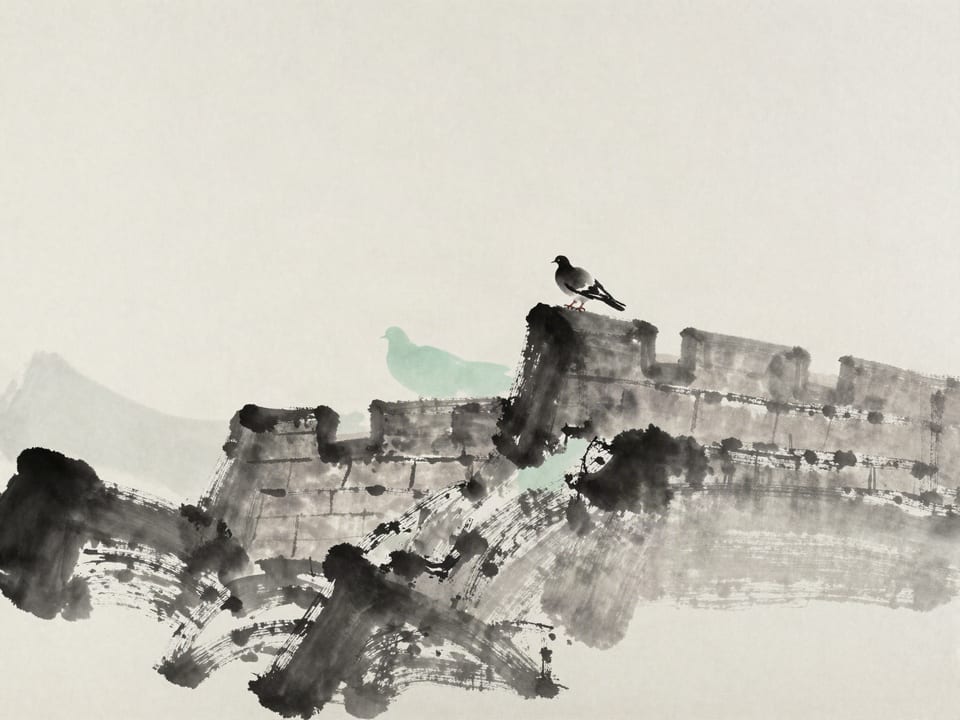
Ink wash painting: A dove landing on a battlement, an unwritten treaty in its shadow.
Unsworn peace is a feint.
What it means

A peace offer without commitment is usually cover for a strike; require the bond, not the words.

Where this sits in the chapter

Chapter 9’s shortest sign may be its sharpest: peace proposals unaccompanied by a sworn covenant indicate a plot. The test is not the warmth of the offer but its binding-ness — what the proposer has staked. Sun Tzu, veteran of treaties in a warring states era, treats unbound friendliness not as ambiguity but as a specific hostile signal.

A modern example

A competitor proposes "exploring partnership" — warm calls, a joint event, genuine-seeming enthusiasm. The overture arrives, not coincidentally, four months before the competitor’s contract renewals with shared customers. No exclusivity is offered, no terms drafted, nothing that would constrain anyone. The firm that asks for the covenant — a signed scope, a real pilot — either gets a partnership or exposes the plot; the firm that accepts the warmth gets ambushed at renewal.

The common misreading

Requiring bonds is not cynicism about cooperation — Sun Tzu’s world of sworn covenants was one where alliances genuinely formed; the verse tells you how to tell the forming from the feigning. The discriminator is stake: what does each party lose if the peace is fake? Where the answer is nothing, keep your formations intact regardless of the mood.

Use it todayDemand the real commitment before trusting a peace signal.
Today’s questionAm I accepting a peace signal that has no bond behind it?
Play the principle

Break Your Pattern

Five marches, three routes, one rival reading your habits. He ambushes the route you favor most. Vary your moves — or lose your supply wagons.

Read this lesson in full →

Prefer a longer war? Play The Campaign — today’s map is the same for every reader.

XFacebookWhatsAppShare today’s Sun Tzu
Tomorrow: Partial movement is a decoy. — “When some are seen advancing and some retreating, it is a lure.”

Come back tomorrow. Browse past days →

What are you dealing with?

Pick what fits and read a short, practical Sun Tzu take on it.

Sun Tzu Daily brings you a fresh sun tzu quote of the day, every day. Each daily lesson pairs a verbatim passage from The Art of War — in the classic Lionel Giles translation — with the strategic principle behind it and one concrete way to apply it before the day is over.

These sun tzu daily quotes are not decoration. They are a working toolkit for people who face competition, negotiation, leadership, and decision-making under pressure: founders, managers, investors, and anyone who wants to think more strategically about the situations they are already in.

The site is organized by the problems people actually search for — Sun Tzu for business, for investors, for entrepreneurs, and on competition, negotiation, leadership, timing, positioning, risk, and decision-making — so ancient Chinese strategy is never more than one click from the problem you are facing today.

Frequently asked questions

What is Sun Tzu Daily?

Sun Tzu Daily is a free daily strategy lesson from Sun Tzu’s The Art of War. Each day you get one verbatim passage, the strategic principle behind it, a plain-English interpretation, one concrete way to use it today, and a one-minute mini-game that lets you play the principle instead of just reading it.

Who was Sun Tzu?

Sun Tzu was a Chinese general and military strategist, traditionally dated to the 5th century BC, credited as the author of The Art of War (孫子兵法). His thirteen chapters on strategy, positioning, deception, and winning without fighting have influenced military doctrine, business strategy, sports, and negotiation for over two thousand years.

Which translation of The Art of War do you use?

Every quotation on Sun Tzu Daily is drawn verbatim from the Lionel Giles (1910) translation, the standard public-domain English translation of The Art of War. The original classical Chinese appears alongside the quotation where it is accurately known, and all interpretation is clearly separated from the historical text.

Is The Art of War still relevant today?

Yes — The Art of War is less about war than about making good decisions with imperfect information: sizing up competitors, choosing your ground, timing your move, and winning in ways that preserve your resources. That is why each daily lesson ends with one concrete modern application for business, investing, negotiation, leadership, or everyday decision-making.

How often is a new Sun Tzu quote published?

One new Sun Tzu quote of the day is published every day, rotating deterministically through all 13 chapters and 242 lessons of the library. Every visitor around the world sees the same daily quote on the same day, and every past lesson stays permanently available in the daily archive.

Is Sun Tzu Daily free to use?

Yes. All 242 daily lessons, the strategy category guides, the chapter library, and the strategy mini-games are completely free, with no account required.

What is the best way to use this site?

Start with today’s lesson — it takes about a minute — then play its mini-game to make the principle stick. If you have a specific problem in front of you, browse the strategy categories (competition, negotiation, leadership, risk, timing, positioning, and more) to go straight to the lessons that speak to it.

Browse Sun Tzu strategy by category →

Browse by strategy

Explore the library